EcoUnplug

Trees, Plants and Forests
The Impacts of Radiofrequency Radiation
Pine Tree Flowering and Germination
Research published in the journal Biologia Futura in 2021 examined Turkist pine trees and the effects of their distance from nearby cell towers on flower and cone yield and germination percentage. The study found being close to the cell tower significantly reduced the number of flowers and cones in individual pine trees. Individual trees that were located a larger distance from the cellular base station (800 meters) had 11 times more flowers and 7 times more cones compared to individual trees closer to the cell tower (100 meters). When the scientists looked at the quality of the seeds from trees closer versus farther from the cell tower, they found a three-times difference in terms of the germination percentage. They concluded that individual Pinus brutia trees are considerably affected by the cellular base station. The authors also noted that due to the current state of technological infrastructure, most living things on the planet are now exposed to electromagnetic radiation constantly, making it a substantial pollution factor.
Ozel HB, Cetin M, Sevik H, Varol T, Isik B, Yaman B. (2021) The effects of base station as an electromagnetic radiation source on flower and cone yield and germination percentage in Pinus brutia Ten. Biologia Futura 72:3, pages 359-365.
Abstract: Electromagnetic radiation is a substantial pollution factor that most of the living things found almost everywhere are constantly exposed to with current technology. The number of studies conducted on the effects of this exposed radiation on the living things constantly is limited; and almost all of the studies conducted are aimed at measuring the effects of short-term exposure. In addition to this, most of the studies conducted on plants focus on herbaceous plant species. In this study, the effects of distance to base station on flower and cone yield and germination percentage were investigated in Pinus brutia individuals, one of the critical forest tree species. The study results revealed that being close to the base station significantly reduced the number of flowers and cones in P. brutia individuals, and that the values obtained in individuals at a distance of 800 m from the base station were 11 times more than the number of flowers and 7 times more than the number of cones compared to the individuals at a distance of 100 m. In the seeds subject to the study, there is a three-times difference in terms of the germination percentage among the individuals located at the furthest and closest distance to the base station. These results show that P. brutia individuals are considerably affected by the base station.

Trees Injured Near Cell Towers
This long-term field monitoring study of trees from 2006–2015 found a high level of damage to trees in the vicinity of mobile phone masts. Usual tree damage is generally unilateral, impacting the full tree, while damage caused by exposure to man-made wireless radiofrequencies often impacts the side of the tree facing the cell tower. Photographs were taken of unusual or unexplainable tree damage, along with measurements of wireless radiation levels. The scientists compiled an electromagnetic map in two major cities by taking 144 measurements of the wireless radiation levels in city streets and parks. They selected 60 damaged trees, 30 randomly selected trees, and 30 trees in low radiation areas. The measurements of all trees revealed significant differences between the damaged side facing a phone mast and the opposite side of the tree, as well as differences between the exposed side of damaged trees and all other tree groups on both sides. No damage was seen in the 30 trees located in low radiation areas, which had low power flux densities (under 50 μW/m2) and no visual contact to any phone mast. Differences in power flux density corresponded to differences in tree damage.
Cornelia Waldmann-Selsam, Helmut Breunig, Alfonso Balmori, Radiofrequency radiation injures trees around mobile phone base stations, Science of The Total Environment, Volume 572, 2016, Pages 554-569.
Abstract In the last two decades, the deployment of phone masts around the world has taken place and, for many years, there has been a discussion in the scientific community about the possible environmental impact from mobile phone base stations. Trees have several advantages over animals as experimental subjects and the aim of this study was to verify whether there is a connection between unusual (generally unilateral) tree damage and radiofrequency exposure. To achieve this, a detailed long-term (2006–2015) field monitoring study was performed in the cities of Bamberg and Hallstadt (Germany). During monitoring, observations and photographic recordings of unusual or unexplainable tree damage were taken, alongside the measurement of electromagnetic radiation. In 2015 measurements of RF-EMF (Radiofrequency Electromagnetic Fields) were carried out. A polygon spanning both cities was chosen as the study site, where 144 measurements of the radiofrequency of electromagnetic fields were taken at a height of 1.5 m in streets and parks at different locations. By interpolation of the 144 measurement points, we were able to compile an electromagnetic map of the power flux density in Bamberg and Hallstadt. We selected 60 damaged trees, in addition to 30 randomly selected trees and 30 trees in low radiation areas (n = 120) in this polygon. The measurements of all trees revealed significant differences between the damaged side facing a phone mast and the opposite side, as well as differences between the exposed side of damaged trees and all other groups of trees in both sides. Thus, we found that side differences in measured values of power flux density corresponded to side differences in damage. The 30 selected trees in low radiation areas (no visual contact to any phone mast and power flux density under 50 μW/m2) showed no damage. Statistical analysis demonstrated that electromagnetic radiation from mobile phone masts is harmful for trees. These results are consistent with the fact that damage afflicted on trees by mobile phone towers usually start on one side, extending to the whole tree over time.

Aspens Produced Shorter Seedlings
Trembling aspens have been declining in the Rocky Mountains and failing to display the bright colors normally seen in the autumn. In a study published in the International Journal of Forestry Research, researchers experimented by shielding some of the aspen trees from ambient man-made radiofrequency waves in the surrounding environment. They found that aspens left without shielding produced shorter seedlings, had smaller leaves, and showed duller colors compared with shielded trees. The aspen trees that were physically shielded from the background radiation produced 60 percent more leaf area and 74 percent more shoot length trees left with only mock shielding rather than radiation shielding. After only two months, the shielded seedlings were 74 percent longer and their leaves 60 percent larger than either the unshielded seedlings or the mock-shielded seedlings. In the fall, only the shielded seedlings displayed the brilliant colors for which health aspens are famous. The seedlings that were left outside of the Faraday cage were exposed as usual to the antenna’s radiofrequency fields. The author noted that these changes could be an “underlying factor in the recent rapid decline of Aspen populations.”
Haggerty, Katie, Adverse Influence of Radio Frequency Background on Trembling Aspen Seedlings: Preliminary Observations, International Journal of Forestry Research, 2010, 836278, 7 pages.

A Major Review: GSM and Flowering Plants
Tomato, Onion, Wheat, Mustard
A major literature review was published in 2018 examining the existing body of scientific research across a wide variety of flowering plant species on the effects of exposure to man-made GSM (Global System for Mobile Communication) technology. Scientists reviewed research on GSM phones in the commonly used 850-1900MHz frequency range. The authors examined physiological, biochemical, and other biomarkers to assess the response of different species to GSM exposure, including studies of monocots such as tomato, onion, wheat and maize, and dicots such as pulses, mustard and flax. The review showed overall reductions in germination, root-shoot lengths, and dry weight, both in dose-dependent manners and time-dependent manners.
"The overall literature review shows the negative effects of GSM and GSM-like radiations on targeted plant species."
In addition, there were disturbances at cytological levels when the roots of onions were exposed to GMS radiation emissions. The authors suggest that more research is needed on the stressful effects of man-made radiation on plants, including research on ways to alleviate these effects.
Khan MD, Ali S, Azizullah A, Shuijin Z. Use of various biomarkers to explore the effects of GSM and GSM-like radiations on flowering plants. Environ Sci Pollut Res Int. 2018 Sep;25(25):24611-24628.

Karolinska Neuroscientist Notes Student Experiment: Seeds Did Not Grow Near Router
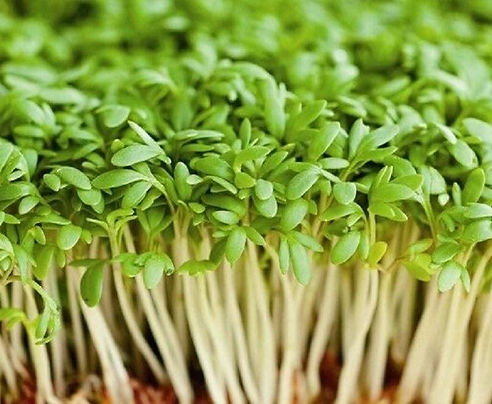
A student science fair experiment caused a stir in the scientific community after finding that seeds would not grow close to wireless routers and laptops in the classroom. A neuroscientist at Sweden's Karolinska Institute brought attention to the student experiment, which involved an experimental group of Lepidium sativum, a type of garden cress, exposed to wireless radiation and a control group not exposed. The students set out to observe whether the garden cress herbs would grow from seeds when exposed versus not exposed to man-made wireless radiation. The plants were placed in separate windows, some close to laptops and routers and others far from laptops and routers. The students filled twelve trays with 400 cress seeds each. Six of the trays were placed in a window next to three laptop computers and two WiFi routers, while the other six trays were placed in a similar window but without computers or routers. Over the next 12 days, the students made scientific observations including photographs, measurements, weights. After 6 days, none of the irradiated seeds had grown and many were completely dead. The cress seeds planted in the non-exposed room, away from the routers, had thrived. The experiment won top honors in a regional science competition and gained the interest of scientists internationally.